
The Performer’s Blues - When the Applause Fades and the Silence Begins
- Calum Lykan Storyteller
- 5 days ago
- 10 min read
There is a moment after every performance that few people ever see.
The audience rises, coats rustle, chairs scrape across wooden floors, and laughter trails off down hallways and stairwells. Someone lingers to shake your hand. Someone else says, “That was brilliant.” Another asks where they can hear more.
Then the door closes. And suddenly the room is quiet.
The candles burn lower. The stage is just a patch of floorboards again. The air that moments ago held dragons and ghosts and old kings now holds nothing at all.
If you have never performed for a living, you might imagine the performer walks away glowing. Riding a wave of applause into the night like some triumphant general returning from battle.
Sometimes that happens. But often something stranger occurs. The adrenaline leaves the body like a tide running out to sea, and what remains behind is a hollow beach.
For years I called that feeling The Performer’s Blues.
It sounded poetic enough to excuse it.
And storytellers are very good at poetic excuses.
The Quiet Crash After the Applause
When you stand in front of a room and tell a story, something extraordinary happens in your body. Your heart rate climbs. Your senses sharpen. Your mind moves faster than usual. You become intensely present.
Every breath of the audience matters. Every laugh, every shift of weight, every silence.
It is a strange and wonderful dance between performer and listener. The energy flows back and forth like a tide between two shores.
But when the story ends, that tide pulls away.
And the performer, still buzzing with adrenaline, steps outside into a cold night and discovers that the world is suddenly very still.
For years I believed that the low feeling that followed performances was simply the cost of that adrenaline leaving my system.
Athletes talk about it. Actors talk about it. Musicians know it well.
You give everything in the moment, and when the moment ends your body drops back to earth with a thud.
So when the blues crept in after shows, I shrugged and told myself it was normal.
“Just the performer’s drop,” I would say.
Then I would make a cup of tea, write a few notes about the evening, and go to sleep.
Most of the time the feeling would fade by morning.
At least it did back then.
Back when my world still revolved around Edinburgh. Back when I never had a moment to breathe.
A City That Never Stops Telling Stories
If there is a place on earth designed for storytellers, it is Edinburgh. The city breathes narrative.
Its closes twist like plot lines.
Its graveyards hold more characters than most novels. Its stone streets carry centuries of whispered secrets. And perhaps most importantly for a performer, it never truly sleeps.
In Edinburgh there is always another audience.
Tourists arrive year-round. Festivals appear like migrating flocks. Ghost tours wind through the streets every night regardless of weather.
For years I lived inside that rhythm. Some weeks I performed four or five nights. Sometimes more.
Even in the quiet months there were events, tours, gatherings, fireside storytelling evenings.
There was always another room. Another story. Another audience ready to breathe life into words.
And when the performer’s blues crept in after a show, it rarely stayed long.
Because tomorrow night there would be another performance.
Another exchange of energy. Another tide coming back in.
I did not realise how much I depended on that rhythm until I lost it.
The Move That Changed the Seasons
.
Life has a way of rewriting your story when you least expect it. For me that chapter began when I moved to Canada. On paper it seemed like a grand adventure. A new country. New landscapes. New possibilities.
And Canada certainly delivers on landscapes.
There are moments here that steal your breath completely.
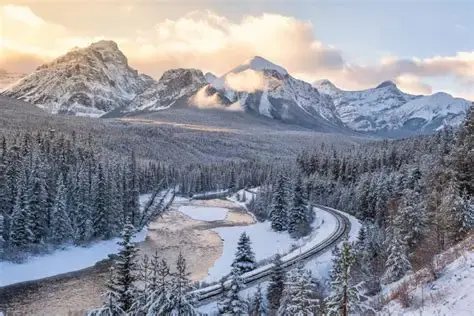
Standing in the shadow of mountains in Banff National Park feels like stepping into a painting that someone forgot to finish. The sky stretches wider. The air smells sharper. The forests feel older than memory.
But there is something else Canada offers in abundance.
Winter.
Long, patient, relentless winter.
In Scotland, winter is wet, grey and miserable in its own uniquely Scottish way. But life keeps moving. Tours run. Pubs stay busy. Streets remain alive.
In Canada, winter can feel like a curtain dropping across the stage of the world. Snow deepens. Tourism slows. People retreat indoors.
For a storyteller used to performing year-round, that change was profound.
Summer in Canada is glorious.
Festivals bloom. Parks fill with people. Music and laughter spill into the streets.
But summer is brief. And when it ends, the quiet months stretch long and cold.
Long enough for silence to grow teeth.
When the Blues Stayed Too Long
At first I still blamed the old explanation.
Performer’s blues. Adrenaline drop. Just the body adjusting.
But something had changed.
The low feeling began arriving more often. And staying longer.
Some mornings it sat on my chest like a weight before I had even spoken a word.
The stories were still there.
But the energy that once carried them seemed to flicker like a candle in a draught.
The strange thing about depression is that it rarely introduces itself clearly.
It doesn’t knock politely and say, “Good afternoon, I am here to rearrange your mind.”
Instead it slips quietly into the room and rearranges the furniture while you are not looking.
You start to feel tired in ways that sleep does not fix. Things you once loved require effort.
You tell yourself it is temporary. Just a phase. Just the weather. Just the performer’s blues.
Storytellers are excellent at creating narratives that protect us from uncomfortable truths.
I told myself many such stories.
Until the day the mountains told me a different one.
The Road Through the Mountains
The Canadian Rockies are magnificent. They are also vast in a way that can make a person feel very small. Driving through them is both humbling and exhilarating.
On the day everything changed, we were travelling through the mountains returning from a glorious weekend in Banff.
The road curved and weaved showing us glorious vistas and breathtaking valleys, all still dusted with the late snows of March. The sky was clear. It felt like an ordinary journey.
As is the way in the mountains, the wildlife lives by its own rules, a herd of Mountain Sheep chose to cross the highway, so naturally we slowed.
Then the car behind us had other ideas, it came out of nowhere, travelling at a speed we found out was in excess of over 140 kilometres per hour.
At the time there was only the sudden awareness that something was wrong. My wife was driving and I remember looking in the side view mirror. The words “There not stopping left my mouth”. My wife reacted and slammed on the gas to try and avoid the inevitable.
And then impact.
Violence arrives in moments like that without warning.
The sound alone is enough to haunt memory. Metal colliding with metal. Glass shattering. Time slowing.
Then the brutal force of physics reminding you that human bodies are fragile things.
Our car was thrown forward like a toy struck by a hammer.
Across the highway. Spinning toward the edge of the road. And toward a rock face that waited like the final page of a story no one wants to read.
There are moments in life when time behaves strangely.
Everything slows.
Your mind records details with painful clarity.
The colour of the sky. The angle of the trees. I remember a moment like a movie scene where I watched the glass slowly drift by me, it almost felt like I could reach out and pluck one from the air.
Then the impossible thoughts that this might be the last thing you ever see.
I would say that somehow, through luck, fate, or the quiet intervention of whatever gods watch over foolish storytellers, the car stopped.
But the truth is, none of those things intervened. No distant god reached down from the clouds.
It was a goddess who acted.
My wife.
As the impact struck us, metal screaming, the world lurching sideways, the car spun across the highway, skidding toward a rock face that loomed ahead like the closing curtain of a very final act. In that wild, impossible moment, while time stretched thin and the road blurred into chaos, my wife did something extraordinary.
She made a choice.
Just before the full force of the collision took hold, she turned the wheel and aimed the car toward the rock.
Not because she wanted to meet it. But because she understood the alternative.
Had we spun the other way, this story might never have been written. The other side of that road did not offer stone and scraped metal.
It offered sky.
A long, empty drop down a cliff face. That was option B.
So she steered us toward the rock. Not into it. But just short of it.
And then the world fell silent again.
But this silence was very different from the quiet that follows a performance.
This was the silence of survival.
When the Mind Opens Old Doors
Trauma does strange things to the mind.
In the weeks after the crash, something inside me shifted. The emotional walls I had carefully constructed over years cracked open. Feelings I had kept at arm’s length stepped forward and introduced themselves properly.
The sadness I had been calling performer’s blues began to reveal its true name.
Depression.
It is a difficult word to accept. Particularly for people who spend their lives standing in front of rooms trying to inspire others.
Storytellers like to imagine themselves as guides through darkness. But guides are not immune to getting lost. In fact, sometimes they are the ones who know the dark roads best.
The crash forced me to look honestly at my own landscape. The long winters. The loss of constant performance. The quiet that had replaced the steady rhythm of storytelling in Edinburgh.
All those things had created space. And in that space depression had quietly taken root.
The accident simply shook the soil enough for me to see it.
The Myth of the Invincible Performer
There is a myth that performers are endlessly resilient. After all, we stand in front of crowds. We command rooms. We create laughter, wonder, suspense.
Surely people who can hold the attention of hundreds cannot possibly struggle with their own minds.
But performance is not immunity. If anything, it can make certain struggles sharper. Because performers become accustomed to powerful emotional highs.
Applause.
Connection.
Shared imagination.
When those highs disappear, the drop can feel dramatic.
Add isolation, long winters, and the loss of a familiar professional rhythm, and the ground beneath your feet begins to shift.
What I had once labelled performer’s blues was partly real. Adrenaline does drop after shows. But the deeper pattern was something else entirely.
And accepting that truth was both terrifying and strangely liberating.
Learning a New Kind of Courage
Admitting you struggle with depression requires a different kind of bravery than standing on stage.
On stage you are in control. The story has structure. The ending is known.
Life does not offer such tidy scripts.
Accepting depression meant learning to talk about things I had long avoided.
It meant recognising that strength does not always look like confidence.
Sometimes it looks like honesty. Sometimes it looks like asking for help. Sometimes it looks like simply surviving the winter.
And Canadian winters, as I have learned, demand respect.
The darkness arrives early. The cold lingers. Weeks pass when the sky seems to forget the colour blue entirely.
For someone whose life once revolved around nightly storytelling, those months can feel like an echo chamber.
But the mountains have also taught me something important.
Even in winter, life continues beneath the snow. Seeds wait. Rivers move under ice.
The story is not finished.
It is simply in a quieter chapter.
Stories as Lifelines
If depression has taken anything from me, it has also given something unexpected in return.
A deeper understanding of the stories we tell to survive.
For centuries storytellers have spoken of heroes descending into darkness before emerging transformed.
The underworld journey. The long night of the soul.
At first those myths seem symbolic.
But when you experience your own darkness, they feel much more like maps.
They remind you that descent is not always defeat.
Sometimes it is preparation. Sometimes it is the moment when the hero stops pretending to be invincible and learns instead how to be human.
In my case, storytelling itself became a lifeline.
Even in quiet months, the stories remained.
They waited patiently.
And when I spoke them again, whether to a small room or a single listener, I felt something stir that winter could not completely bury.
Connection.
That ancient human magic that happens when one person says:
“Let me tell you a story.”
The Long Winter and the Short Summer
Canada has taught me patience.
It has also taught me gratitude for summer in a way I never understood before.
When the snow finally melts and the days stretch long again, the country seems to exhale.
Festivals return. Music drifts across parks. Storytellers find audiences once more.
And those moments feel sharper precisely because they are fleeting.
Perhaps that is the real lesson hidden inside both depression and winter.
Nothing lasts forever. Not the darkness. And not the light either.
Life moves in seasons.
The trick is learning to endure one while remembering the other will come.
The Story Continues
I still perform. I still tell stories.
And yes, sometimes the performer’s blues still visit after a show.
But now I recognise them for what they are.
Part biology.
Part emotion.
Part the strange cost of creating magic in a room and then watching it vanish.
But I also recognise the deeper landscape of my own mind.
Depression is part of that landscape now.
Not the whole map. But a valley I must travel through carefully.
The car crash in the mountains forced that understanding upon me in the most dramatic way possible.
Sometimes it takes a moment of terrifying clarity to strip away the comforting stories we tell ourselves.
But strangely enough, that moment also gave me something precious.
Perspective.
The knowledge that I am still here. Still breathing. Still able to tell stories.
And if there is one truth storytellers understand better than most, it is this:
As long as the story continues, hope does too.
One Last Thought
If you are reading this and recognising pieces of your own experience, know this.
You are not alone.
Depression is far more common than many of us realise.
Performers, artists, teachers, builders, parents, no one is exempt.
But neither are we powerless. Stories remind us of that.
They remind us that the hero rarely defeats darkness alone.
There are companions along the road.
Guides.
Friends.
Strangers who share wisdom at exactly the right moment.
So if you find yourself in a long winter of the mind, remember something the mountains taught me.
Winter may last a long time.
But spring always finds its way back.
And somewhere, waiting patiently in the quiet, there is another story ready to be told.


Thanks for sharing Calum 🎭 Making yourself open and vulnerable takes real courage, especially when you’re wearing a kilt 😆